Explore types and properties of bricks with Star Cement. Learn construction tips, brick quality standards, and masonry durability for strong structures.
In modern construction, selecting the right building materials is critical to ensure safety, durability, and long-lasting performance. Among these materials, bricks have remained a cornerstone in construction practices for centuries. Understanding the types and properties of bricks is essential for builders, architects, and homeowners who aim to achieve structures that are both aesthetically appealing and structurally sound. Star Cement provides guidance on using high-quality bricks alongside it’s trusted cement products to ensure superior masonry durability and adherence to brick quality standards.
Visit Star Cement’s website for more on it’s operations and customer support including it’s contact page at Star Cement Contact Page.
Understanding Bricks in Construction
Bricks are rectangular blocks made from clay, shale, fly ash, concrete, or other materials. They are used extensively in walls, pavements, and other masonry constructions. Bricks offer versatility, thermal insulation, and load-bearing capabilities, making them an integral part of any building project.
The performance of a brick depends not only on the raw materials but also on the manufacturing process and curing techniques. For best results, Star Cement recommends combining quality bricks with it’s cement products to enhance structural integrity and overall masonry durability. Star Cement building materials are designed to complement high-quality bricks for all types of construction projects, from residential homes to industrial buildings.
Major Types of Bricks
When selecting bricks, it is important to understand the different types and their specific properties.
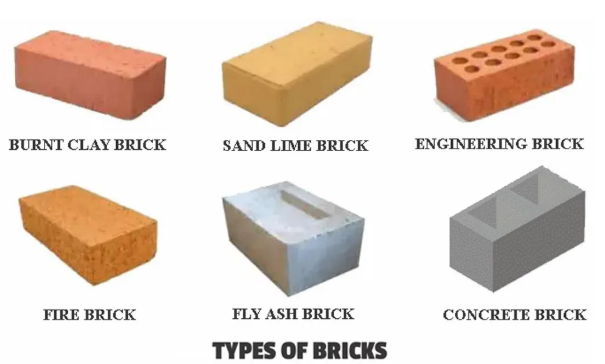
Below are the most commonly used bricks in construction:
1. Clay Bricks
Clay bricks are the most traditional type of bricks. They are made by molding clay and firing it in a kiln at high temperatures. The process ensures strength, durability, and fire resistance.
- Properties: High compressive strength, excellent thermal insulation, and long lifespan.
- Applications: Load-bearing walls, pavements, and decorative structures.
Using clay bricks in combination with Star Cement construction tips ensures strong bonding and long-term masonry durability.
2. Fly Ash Bricks
Fly ash bricks are made from fly ash, cement, sand, and water. They are eco-friendly and lightweight.
- Properties: Less water absorption, uniform size, and good compressive strength.
- Applications: Non-load-bearing walls, partition walls, and paving.
By pairing fly ash bricks with Star Cement’s premium cement products, builders can enhance sustainability while maintaining high brick quality standards.
3. Concrete Bricks
Concrete bricks are manufactured using a mixture of cement, sand, and aggregates. They are strong and durable, with excellent resistance to environmental wear and tear.
- Properties: High strength, uniform shape, and durability.
- Applications: Industrial buildings, retaining walls, and pavements.
Our Star Cement building materials are ideal for use with concrete bricks to achieve superior masonry durability and structural performance.
4. Engineering Bricks
Engineering bricks are highly durable bricks made from clay or shale. They have low water absorption and high compressive strength.
- Properties: High mechanical strength, chemical resistance, and low porosity.
- Applications: Foundations, basements, and walls in contact with soil or moisture.
Following Star Cement construction tips, engineering bricks are recommended for critical load-bearing and high-moisture applications.
5. Fire Bricks
Fire bricks, also known as refractory bricks, are designed to withstand extreme temperatures. They are commonly used in furnaces, fireplaces, and kilns.
- Properties: High thermal resistance, low thermal conductivity, and long-lasting performance.
- Applications: Ovens, chimneys, and industrial kilns.
Using fire bricks with Star Cement ensures maximum heat resistance and long-term structural integrity.
Key Properties of Bricks

Understanding the types and properties of bricks involves evaluating several essential characteristics that determine their suitability for construction:
Compressive Strength
Compressive strength is the ability of a brick to withstand loads without cracking or breaking. It is a crucial factor in ensuring masonry durability. Star Cement emphasizes selecting bricks with compressive strengths that align with it's cement grades for optimal structural performance.
Water Absorption
Low water absorption reduces the risk of dampness and efflorescence in walls. Bricks with lower porosity, when used with Star Cement, provide long-lasting and moisture-resistant masonry.
Durability
Durability refers to a brick’s capacity to withstand weathering, chemicals, and environmental factors. Combining high-quality bricks with Star Cement’s durable products enhances the lifespan of the construction.
Size and Shape
Uniform size and shape ensure proper alignment during construction. Non-uniform bricks can compromise masonry durability and require more mortar, increasing costs. Star Cement construction tips include selecting consistent brick sizes to maintain quality standards and support the strength and longevity of the structure.
Thermal Insulation
Bricks provide natural insulation against heat and cold. Selecting the right type of brick helps maintain comfortable indoor temperatures, reduces energy costs, and improves sustainability.
Importance of Brick Quality Standards
Adhering to brick quality standards is essential for safe and long-lasting construction. Poor-quality bricks can lead to structural issues, higher maintenance costs, and reduced durability.
Star Cement encourages builders to select bricks that meet national and international standards. Star Cement’s cement products are designed to complement these quality bricks, ensuring superior bonding, strength, and longevity.
For guidance on choosing appropriate bricks and cement for your project, visit Star Cement’s website for more on it's operations and customer support including it's contact page at Star Cement Contact Page.
Common Construction Applications of Bricks
Bricks are versatile and can be used in a variety of construction projects. Some common applications include:
- Residential Buildings: Load-bearing walls, partitions, and facades.
- Commercial Buildings: Pavements, flooring, and walls.
- Industrial Structures: Retaining walls, chimneys, and heavy-duty flooring.
- Landscaping: Garden walls, pathways, and decorative features.
Star Cement building materials are designed to support these applications, ensuring optimal masonry durability and adherence to brick quality standards.
Combining Bricks with Star Cement
Star Cement recognizes that the strength and longevity of any structure depend not only on bricks but also on the quality of cement used. Star Cement’s range of cement products is engineered to work seamlessly with all types of bricks, ensuring superior adhesion, reduced water penetration, and enhanced durability.
Star Cement Construction Tips
- Proper Mixing: Use recommended cement-to-sand ratios for strong bonding.
- Curing: Ensure proper curing of brick masonry to prevent cracks.
- Alignment: Maintain uniform brick sizes and layers for structural stability.
- Moisture Protection: Select bricks with low water absorption to reduce dampness.
Following these Star Cement construction tips ensures that both bricks and cement perform at their best, enhancing overall masonry durability.
Advantages of Using High-Quality Bricks
- Enhanced Strength: Superior compressive strength ensures safety.
- Longevity: Reduced maintenance and longer lifespan of structures.
- Energy Efficiency: Improved thermal insulation reduces energy consumption.
- Aesthetic Appeal: Uniform and high-quality bricks provide a visually pleasing finish.
Using high-quality bricks in combination with Star Cement products guarantee that construction projects meet modern building requirements while maintaining excellent structural integrity.
Build Strong, Durable, and Reliable Structures
Understanding the types and properties of bricks is essential for creating durable and long-lasting structures. Star Cement emphasizes the importance of combining quality bricks with it's cement products to achieve superior masonry durability, compliance with brick quality standards, and overall construction excellence.
For professional guidance on selecting the right bricks and cement, readers can explore the full range of Star Cement building materials and follow Star Cement construction tips. Visit Star Cement’s website for more on their operations and customer support including our(their) contact page at Star Cement Contact Page.
By adhering to these best practices, builders and homeowners can ensure that their structures are not only strong and durable but also aesthetically appealing and sustainable for years to come.